Welcome New Patients!

Is Professional Teeth Whitening Safe for Your Enamel and Gums
San Antonio, TX


Many San Antonio patients ask the same question before their first whitening visit: is professional teeth whitening safe for your enamel and gums? It is a smart question to ask. At Life Smiles Dental Studio, Dr. Beryl Otchere believes every patient deserves honest, evidence-based answers before starting any treatment. This article breaks down what the science says, what risks are real, and who should approach whitening with extra caution.
How Professional Teeth Whitening Works on Enamel
Professional whitening uses hydrogen peroxide or carbamide peroxide as the active ingredient. These compounds penetrate the outer enamel layer and break apart stain molecules inside the tooth. The enamel itself is not removed or damaged in this process. The peroxide simply lifts discoloration at a molecular level.
Research published in peer-reviewed dental journals confirms that professional concentrations, when applied correctly, do not erode enamel. The key phrase there is applied correctly. That means the right concentration, the right exposure time, and the right patient selection. Dentist-supervised whitening controls all three of those factors.
Over-the-counter strips and trays use much lower peroxide concentrations. They are generally safe too, but they produce slower and less predictable results. Professional whitening delivers faster outcomes under controlled conditions, which is why so many San Antonio patients prefer the in-office route.
Is Professional Teeth Whitening Safe for Your Enamel and Gums — Understanding Sensitivity
Tooth sensitivity is the most commonly reported side effect of whitening. It is temporary in the vast majority of cases. Sensitivity usually peaks within 24 to 48 hours after treatment and resolves on its own.
Peroxide can temporarily widen tiny channels inside the dentin layer beneath your enamel. These channels connect to the nerve of the tooth. When they are briefly more open, hot or cold stimuli feel sharper. This is not damage — it is a transient physiological response.
Dr. Otchere recommends several strategies to manage sensitivity effectively:
- Use a desensitizing toothpaste containing potassium nitrate for two weeks before whitening
- Ask about fluoride treatments applied immediately after the whitening session
- Avoid very hot or cold beverages for 48 hours post-treatment
- Space out whitening sessions if you have naturally sensitive teeth
- Consider a lower-concentration take-home tray as an alternative to in-office treatment
Gum sensitivity is another concern patients raise. Professional whitening uses custom-fitted trays and protective barriers to keep bleaching gel away from soft tissue. When gel does contact gums briefly, mild irritation can occur. This typically clears up within a day or two without any intervention.
Who Should Avoid or Postpone Teeth Whitening in San Antonio
Whitening is not appropriate for every patient. Some conditions make it less effective or potentially problematic. Knowing these in advance helps you have a productive conversation with Dr. Otchere during your consultation.
Patients who should avoid or postpone whitening include those with:
- Untreated cavities — peroxide can penetrate decayed areas and irritate the pulp
- Gum disease — inflamed or receding gums increase sensitivity and exposure risk
- Cracked or severely worn enamel — open pathways to dentin amplify sensitivity
- Existing porcelain restorations — crowns and veneers do not respond to bleaching agents
- Active orthodontic treatment — brackets block gel from reaching all tooth surfaces evenly
- Pregnancy or nursing — a precautionary recommendation due to limited research in this group
Patients with dental crowns or veneers deserve a special note. Whitening will brighten your natural teeth but leave restorations unchanged. This can create noticeable color mismatches. If you have Dental Crowns San Antonio patients often ask about, Dr. Otchere will discuss realistic outcomes before any whitening begins.
Children and teenagers under 16 should also wait. Pulp chambers are larger in younger teeth. This increases the risk of irritation during whitening treatment.
Professional Whitening vs. Store-Bought Kits — A Safety Comparison
Store-bought whitening products are widely available and heavily marketed. Many are safe when used as directed. However, they carry a higher risk of misuse than dentist-supervised treatment.
Generic trays do not fit your teeth precisely. Ill-fitting trays allow gel to seep onto gum tissue more easily. That contact can cause soft tissue irritation and uneven whitening results. Professional custom trays eliminate most of that risk.
Some patients also use whitening products too frequently. Overuse can temporarily compromise enamel surface integrity. A dentist monitors your treatment timeline and adjusts based on your tooth and gum response. That oversight simply does not exist with at-home kits purchased without professional guidance.
It is also worth noting that some stains do not respond to peroxide at all. Tetracycline staining and fluorosis require different treatment approaches. Options like Dental Bonding San Antonio patients have used can address staining that bleaching cannot reach. Dr. Otchere will identify your stain type before recommending any whitening approach.
What to Expect During a Professional Whitening Visit at Life Smiles Dental Studio
Understanding the process helps reduce any anxiety before your appointment. A typical in-office whitening visit at Life Smiles Dental Studio follows a straightforward sequence.
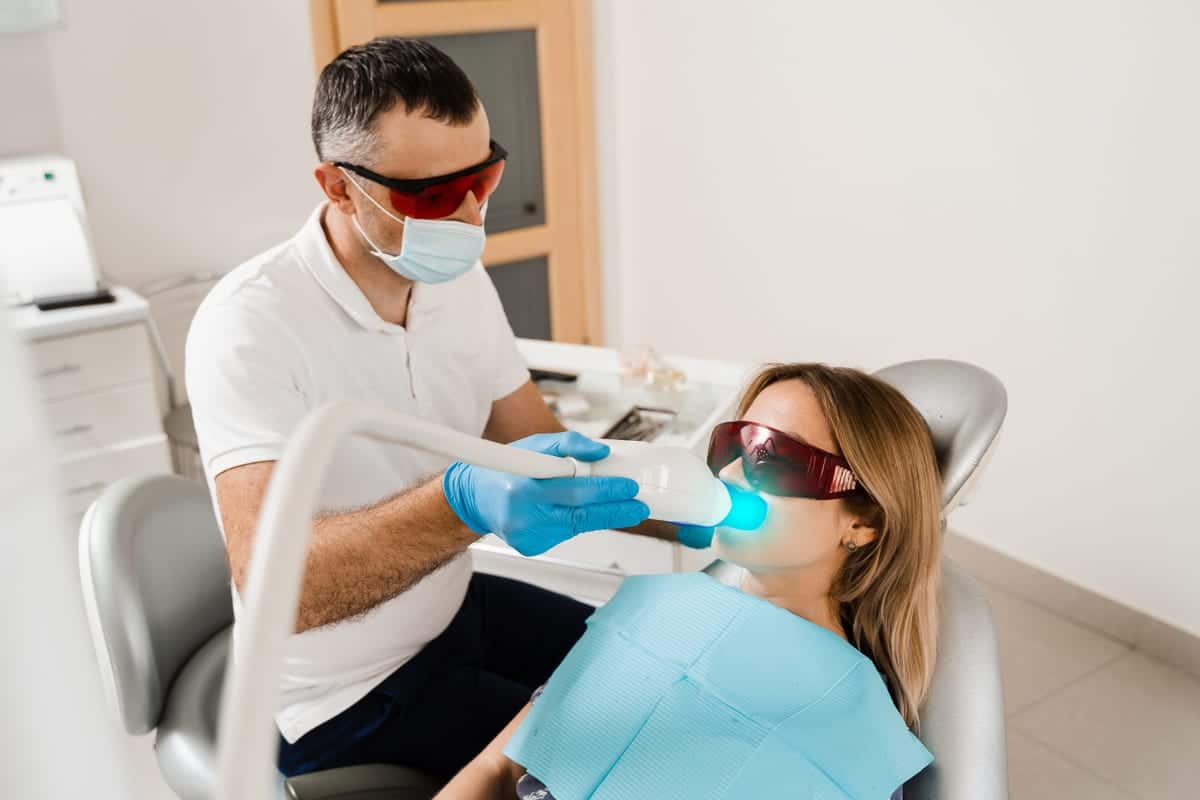
First, Dr. Otchere or a team member will review your dental history and examine your teeth and gums. This step confirms you are a good candidate for whitening. Any active dental concerns will be addressed before whitening begins.
Next, a protective barrier is applied to your gums. This shields soft tissue from direct contact with the bleaching gel. Custom trays or in-office application equipment then deliver the whitening agent evenly across all visible teeth surfaces.
The gel remains in place for a set amount of time. Most in-office sessions last between 60 and 90 minutes total. You will leave the same day with noticeably brighter teeth and clear post-care instructions to follow at home.
Maintaining Your Results and Protecting Enamel Long-Term
Whitening results are not permanent. Most patients see their results last between one and three years with proper care. Your habits after whitening play a large role in how long your results hold.
Limiting stain-causing foods and drinks like coffee, red wine, and dark berries helps extend your results. Rinsing with water after consuming these items also makes a meaningful difference. Using a soft-bristled toothbrush and fluoride toothpaste protects enamel during and after your whitening treatment.
Periodic touch-up treatments can refresh your shade as needed. Dr. Otchere can recommend a maintenance schedule based on your lifestyle and how quickly your teeth tend to re-stain. Regular cleanings at Life Smiles Dental Studio also remove surface buildup that can dull your results over time.
Frequently Asked Questions
Does professional teeth whitening permanently damage enamel?
No. Research consistently shows that professional whitening, when applied at appropriate concentrations and durations, does not permanently damage enamel. Temporary sensitivity is common, but enamel structure remains intact after properly supervised treatment.
How long does tooth sensitivity last after whitening?
Most patients experience sensitivity for 24 to 48 hours after a whitening session. Using a desensitizing toothpaste before and after treatment helps reduce discomfort. Sensitivity that lasts beyond a few days should be reported to your dentist.
Can I whiten my teeth if I have dental crowns or veneers?
Whitening agents do not change the color of porcelain crowns or veneers. Whitening your natural teeth while leaving restorations unchanged can create visible color mismatches. Talk to Dr. Otchere about your options before starting any whitening treatment.
Is in-office whitening safer than store-bought whitening kits?
Both can be safe when used correctly. In-office whitening offers more precise concentration control, custom-fitted trays, and professional oversight. This reduces the risk of gum irritation and enamel overexposure compared to unsupervised at-home kits.
Who is not a good candidate for teeth whitening in San Antonio?
Patients with untreated cavities, active gum disease, cracked enamel, or who are pregnant should postpone whitening. Children under 16 are also not recommended for whitening treatments. A consultation with Dr. Otchere at Life Smiles Dental Studio will determine if whitening is right for you.
If you are ready to explore your whitening options safely, our team at Life Smiles Dental Studio is here to guide you every step of the way. Book Now to schedule your appointment with our team.